- +1 (602) 922-5990
-
This email address is being protected from spambots. You need JavaScript enabled to view it. - Mon - Fri 8:00a - 5:00p AZ






-

Executive perspective: Compliance tells an organization what it is expected to do. Confidence comes from knowing, through evidence, testing, measurement, and experience, that the organization can actually do it when conditions become difficult.
For years, organizations have responded to risk largely through a compliance lens. Policies are written. Controls are documented. Assessments are completed. Business continuity plans are maintained. Vendors are reviewed. Recovery procedures are recorded. Audits are performed. Findings are tracked.
All of these activities matter.
-
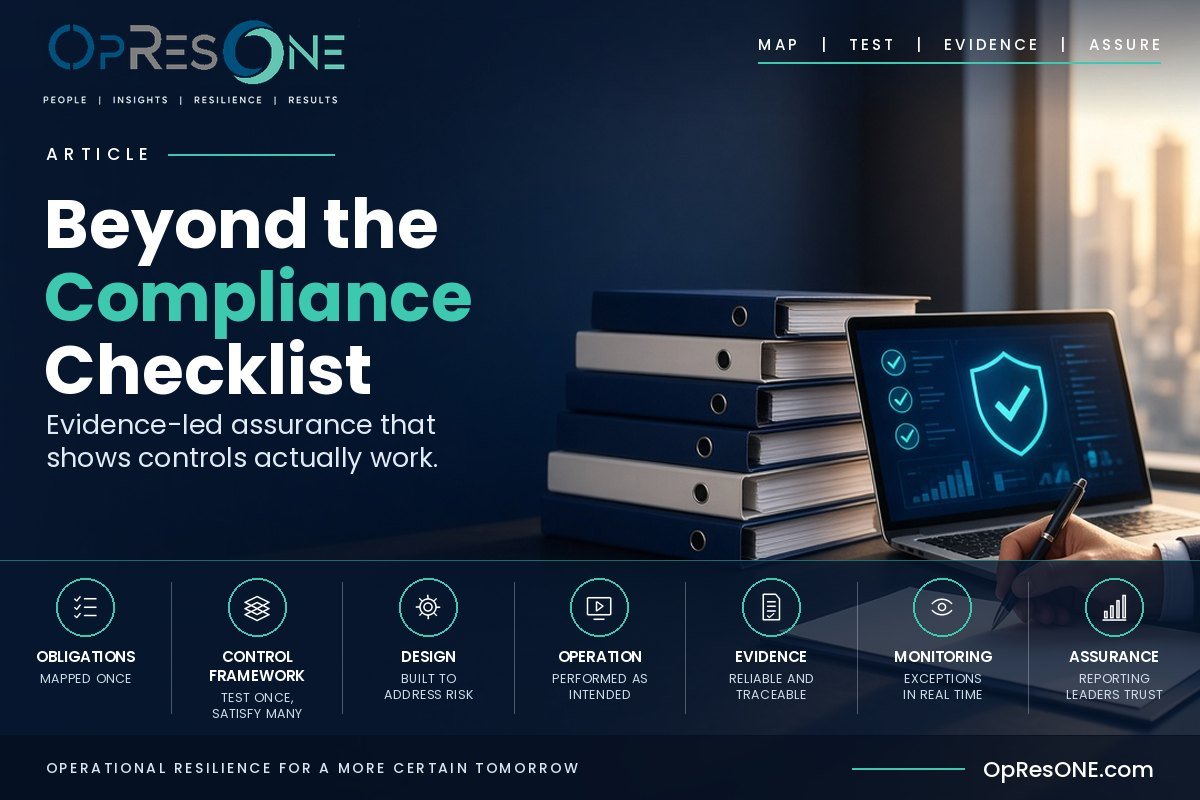 Every compliance program eventually produces a checklist. Requirements are listed, controls are mapped, owners tick boxes, and the audit file fills up. The checklist is useful, but it answers a narrow question: did we do what we said we would do? It rarely answers the question executives, auditors, regulators, and customers increasingly ask: how do you know your controls actually work?
This article explains how to move from checklist compliance to evidence-led control assurance, an approach that tests whether controls are well designed and operating effectively, and that produces evidence strong enough to rely on. It is written for compliance leaders, internal auditors, and the control owners who carry the day-to-day load.


