





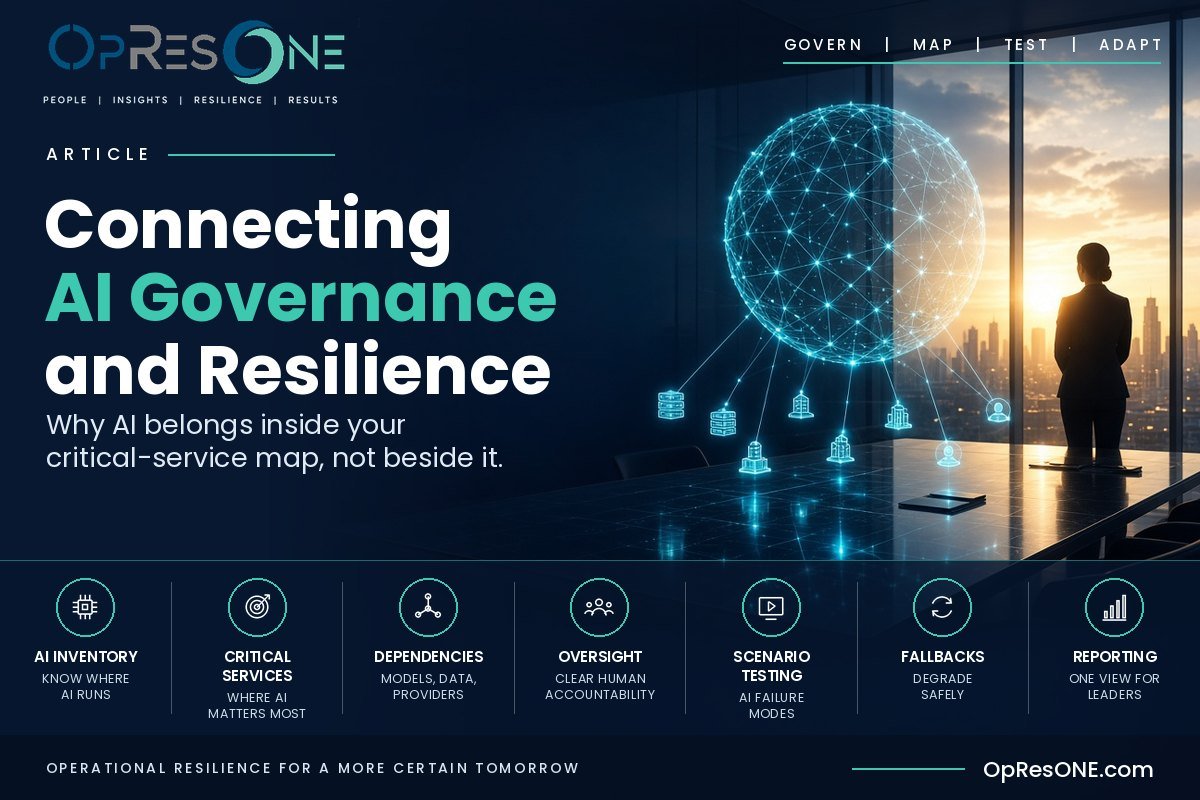
Many organizations now run two important programs side by side without connecting them. One is AI governance: the policies, committees, and risk assessments that decide how artificial intelligence may be developed, bought, and used. The other is operational resilience: the discipline of keeping critical services running through disruption. They are often staffed by different people, report to different executives, and use different vocabularies.
That separation made sense when AI sat at the edges of the business, in pilots and productivity tools. It makes less sense now that AI models help route customer calls, flag fraud, schedule maintenance, draft communications, and prioritize work queues. When AI becomes part of how a critical service is delivered, its failure becomes a resilience problem, and resilience planning that ignores it has a blind spot.
This article explains why the two disciplines need each other and how leaders can connect them without building another layer of bureaucracy.


